Artist Conversation #2

Artist: JP Gonzales Artist: Jennifer Tejada

Gallery: Max L. Gatov Gallery West Gallery: Max. L. Gatov Gallery East

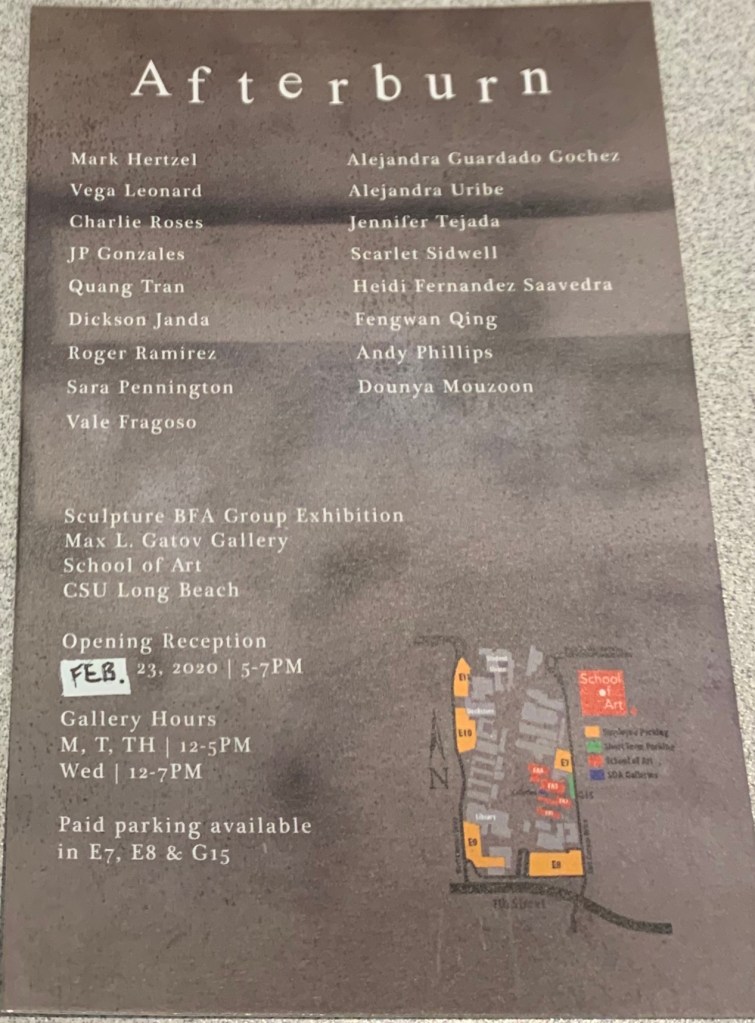
Exhibition: Afterburn

Instagram and Website not provided

About the Artist’s

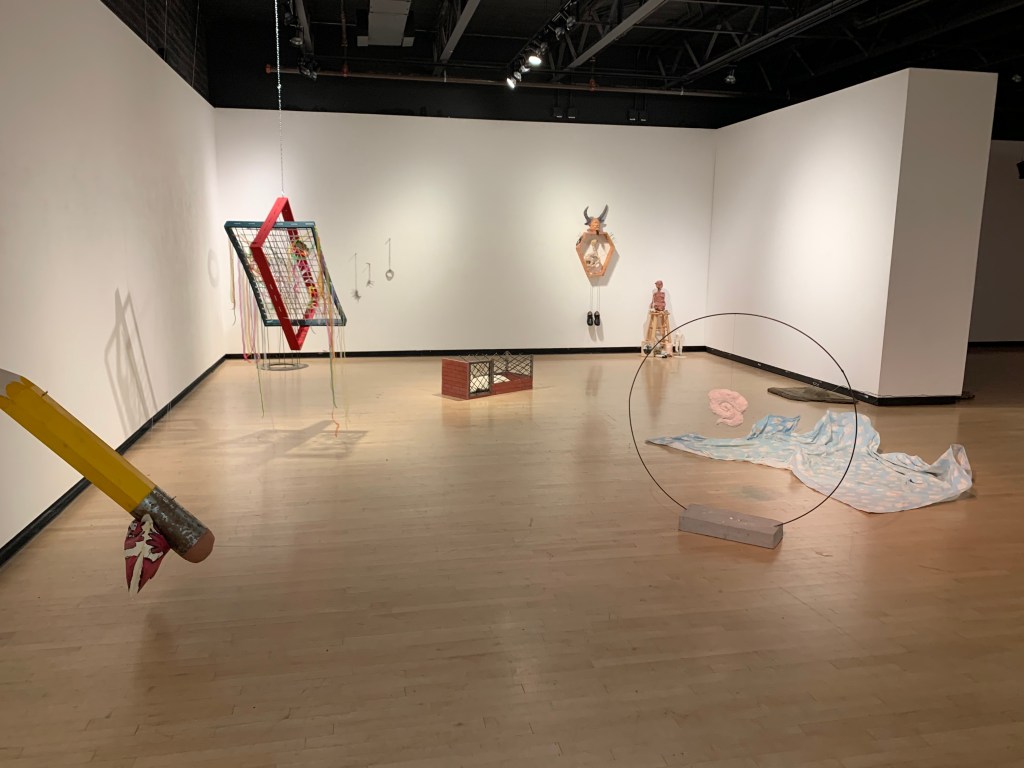
This exhibition consists of sculptures from the Sculpture BFA Group, here at Cal State Long Beach. Afterburn, culturally speaking, is a sensation that is valued as a reminder of work or labor. Gonzales’s and Tejada’s pieces reflect the pain held in the body and mind. Their work aims at visualizing pain and discomfort that many of us lock up inside.

Formal Analysis

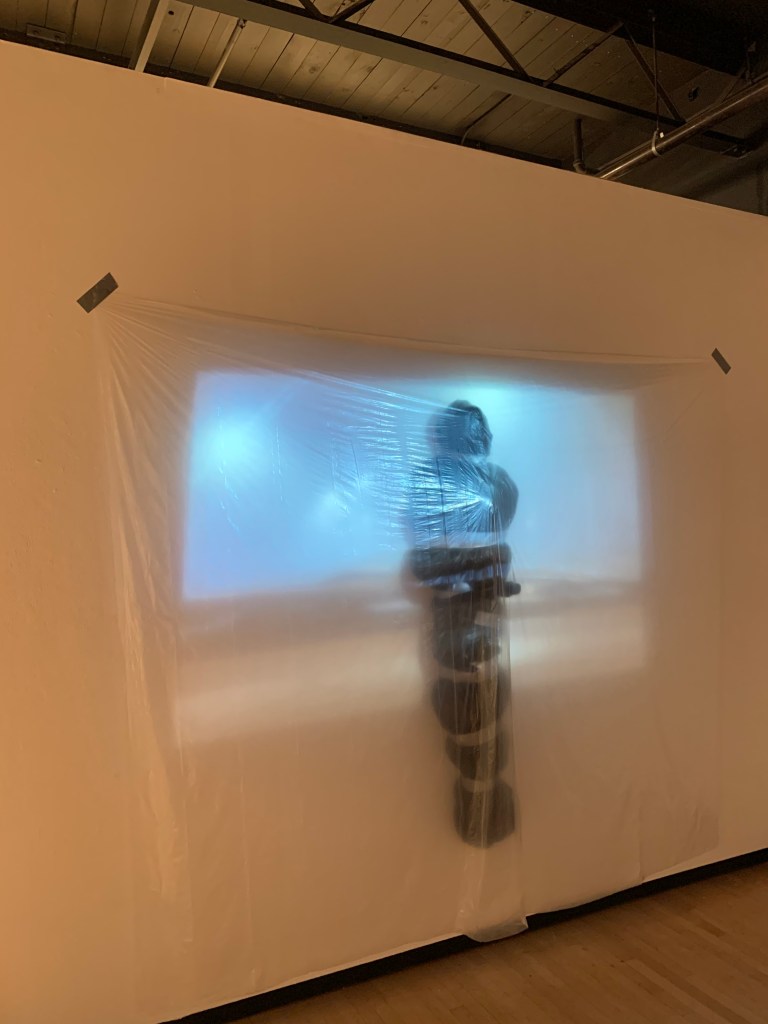
“Drive” by JP Gonzales is a large piece attached to a wall. The piece consists of plastic, duct tape, and iphone footage. When I stood near it the figure, which seems to be a dead body, made my gut feel a bit weird. “Self-portrait” by Jennifer Tejada arguably portrays a demonic/satanic figure that represents the feeling someone has for themselves. The piece consists of mixed media and culture.

Content Analysis

Both pieces represent a common theme of anguish. “Drive” feeds off a dark feeling of a person being trapped. More so, a sense of suffocation can be felt from this piece. It’s almost as of the figure inside is trying to gasp for air and escape his confinement. Similarly, “Self-portrait,” is about a innocent being trapped inside something monstrous. This figure with the horns is preventing the tiny goat from being free. Ultimately, the fact that the piece is called “Self-portrait” leads me to conclude that this is a representation of how someone feels on the inside. Their true self is trapped inside a version of themselves society has formed for them; leaving them in a state of despair.

My Experience

This exhibition really was powerful. The pieces fed off feelings of torment and anguish. When I saw “Drive,” I was honestly caught off guard at first with its morbidity. It made my gut twist and I felt like the figure was going to jump out or something. On the other hand, “Self-portrait” made me feel sad. The goat tangled inside the demonic figure fed off a feeling a sorrow that resonated with me. Overall, I was not expecting to feel this way, especially just by looking at their work. It was a very cool experience.

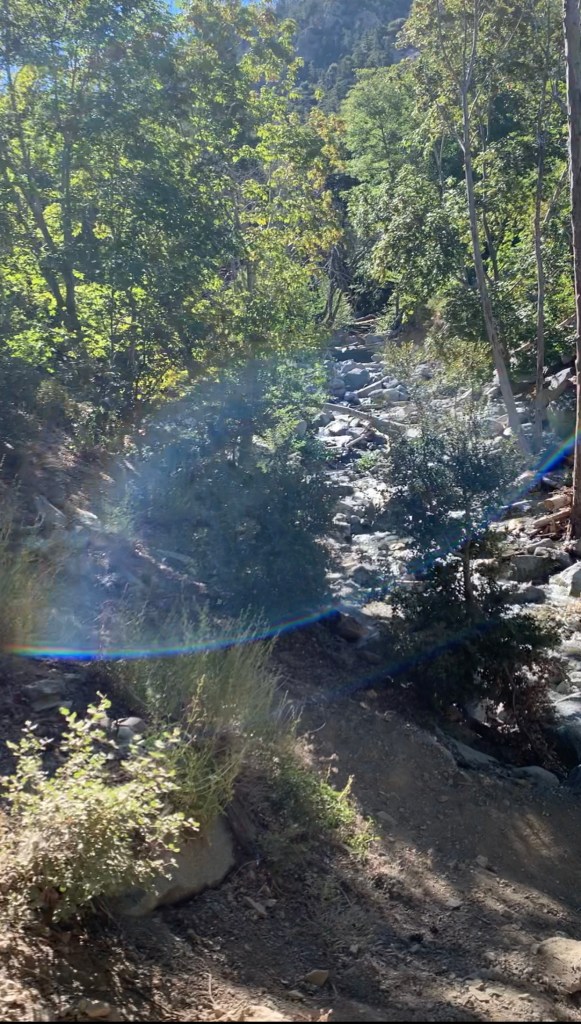
Photo Story Project

Here’s a photo story of my hiking experience on the Ranch Cucamonga Peak Trail

Rancho Cucamonga Peak, an 11.6 mile hike that reaches a elevation of 8,859 feet that my friends and I went on.


Here a picture as we started our ascend at the base of the mountain.
Here’s an image of my friend Kelly as we are hiking the mid portion of the trail. So about 2 hours in.
In the picture we are beginning to scale the side of the mountain peak, however we still have a long way to go.
A view of the incline of the mountain.
After a few more hours we finally made it to the top!
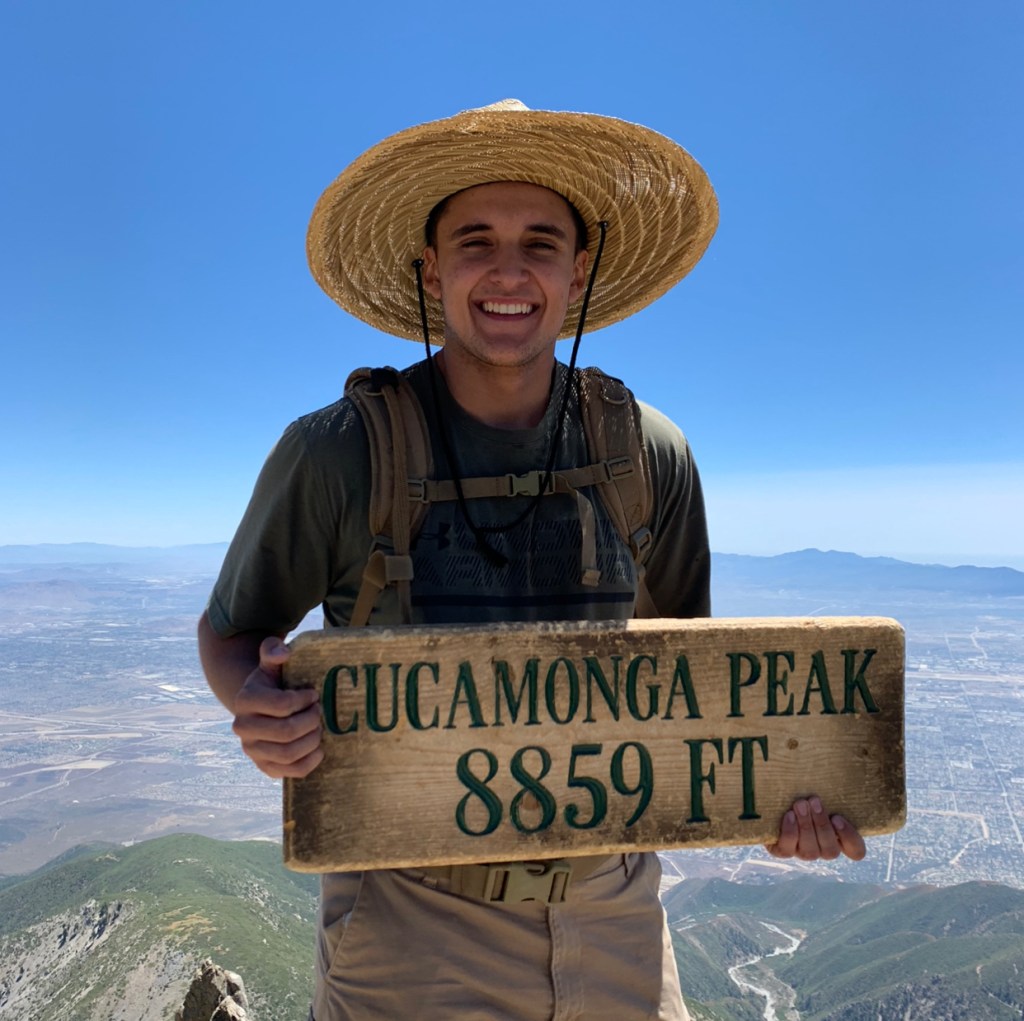
A picture of me holding the sign that has been left up there.

Why did you choose this story? It was a memorable experience and I felt like pictures would tell how the hike went well.

How do you think you did? Mediocre. Felt like my pictures could have been a little more detailed to tell how the hike went. More people less nature I suppose.

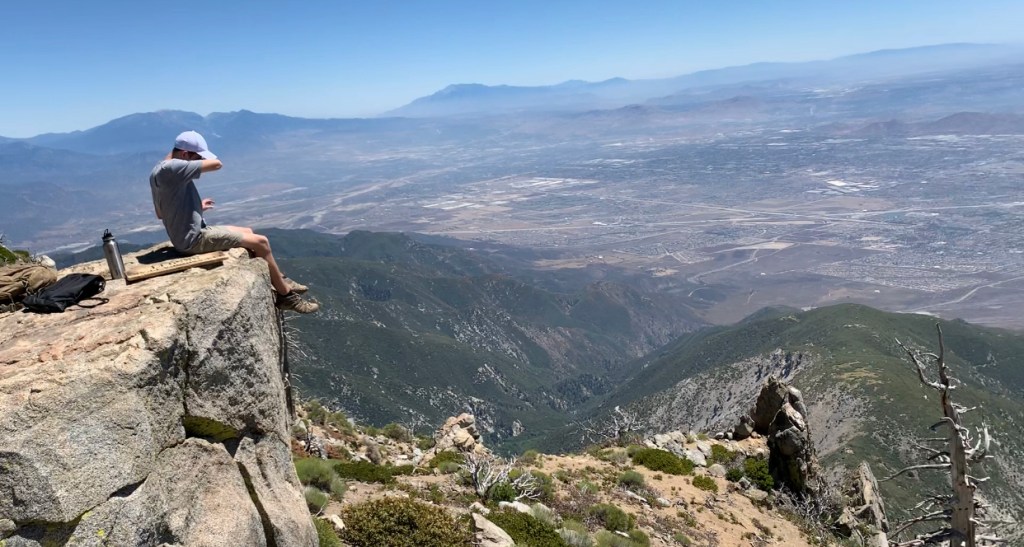
Which image do you think is the individually “best” image in your story? I think the image of my friend sitting on top of the peak is the best one. In my opinion, it sort of concludes the story well.

Does your photostory contain an image that you think is not, by itself, a “great” image, but that is nonetheless important because it helps to tell your story? Yes. The first image is not authentic, but nevertheless it helps give a general idea of what the trail looks like.

What would you do different next time? I would take pictures of people/friends to tell a story a bit better. Only taking pictures of nature sort of all looks the same making it hard for the viewer to comprehend whats happening.

Are there other Photo Stories you might like to tell? No, not at the moment. (:

Drawing is also a Language

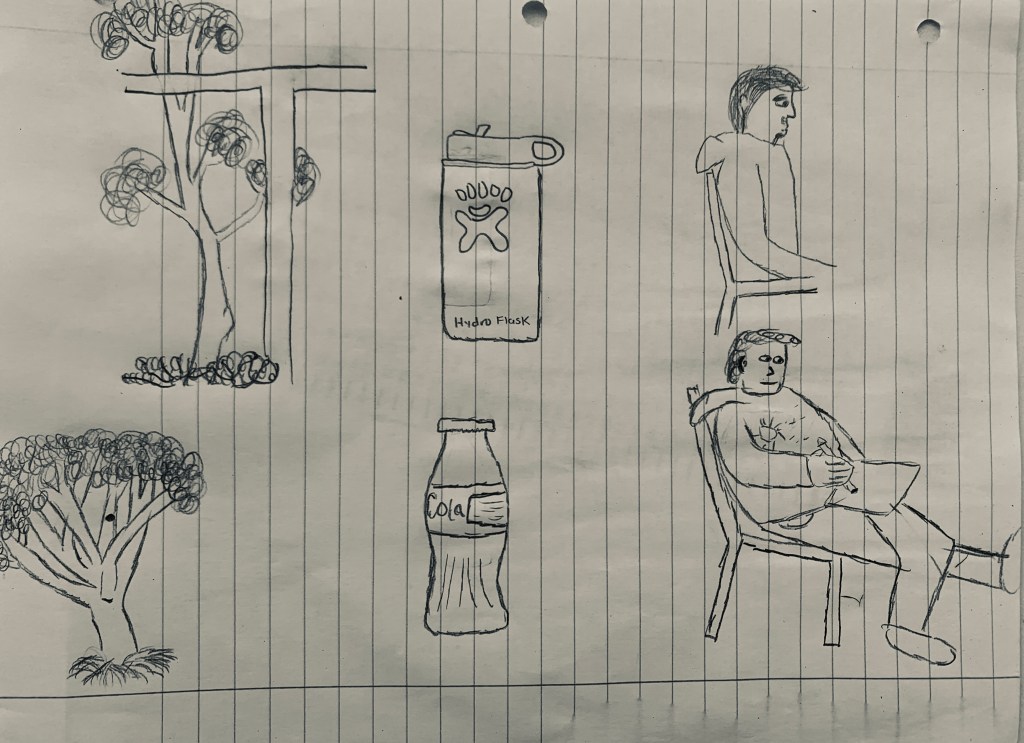
Here’s my six drawings!

Was it fun? Was it frustrating? Do you like to draw? Will you ever try again?

I did experience satisfaction with my tree drawings, so that part was fun. However is was really frustrating drawings the drinks and the people. I think this is because the trees had more of a loose structure while a cup or a person obtain fixed attributes. I do like to draw, but I wouldn’t choose to do it on my free time. I could potentially try this again. However, not in the near future.

Do you think if you practiced for 100 hours, or 1,000, that you would get a lot better?

Yes, if I were to practice upon hundred’s and upon thousand’s of hours, I would become very good at drawing. My hand eye coordination would increase exponentially.

What is your major? Can you think of any ways that simple sketching of some kind could be useful in your major?

My major is aerospace engineering. Yes, I do believe sketching out things would help plenty. For instance, drawing out physics problems is really beneficial to see what your’re trying to calculate.

Is Drawing a Language? Can drawings say things that are hard to say with words?

Drawing is indeed a language. It’s obviously not with words, but more so with feeling. A drawing of a happy child living in the favelas of Brazil, for instance, could say a lot without writing a single word. I understand that this a cliche, but there is a reason why the phrase, ” A picture is worth a thousand words,” exists. Sometimes pictures/drawings can more effectively transcend ideas than words.

Artist Conversation #1

Artist: Jean Iwohara

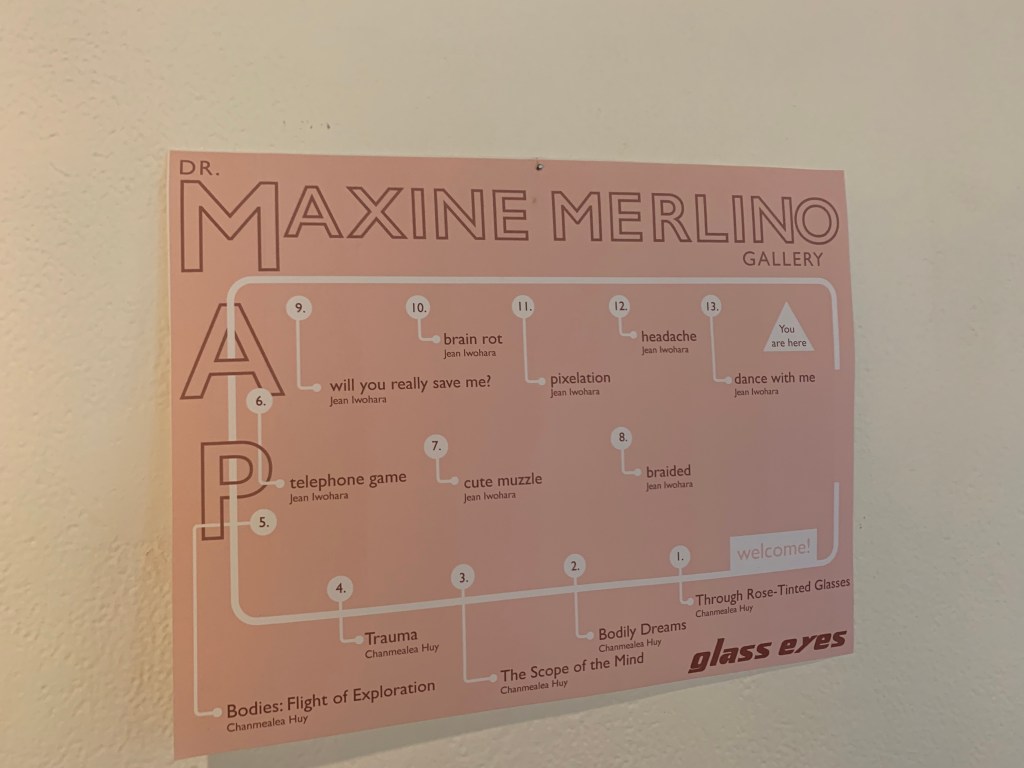
Gallery: Dr. Maxine Merlino Gallery

Website: jeaniwohara.weebly.com

Instagram: @jelly.jean

About the Artist

Jean is an amazing artist here a LBSU. With a Bachelors of Fine Arts in illustration, Jean’s work hits close to home. She exclaimed that her work is a representation of how she is feeling. For example when she is stressed or anxious, she uses those emotions to guide her artistry. Her work showcases the realms of typography and gouache painting.

Formal Analysis

As for the formal qualities of her paintings, her creations are full of color and vibrancy. From what I experienced, her art pieces tend to be small to average sized portraits. The paintings have a smooth like texture to them as if you could feel it. More so, all her colors are straight in the sense that they are all kept within the “boundaries” of the figures she is drawing. The amount of small detail she uses in her paintings is incredible. There are many vivid primary colors that really give her work a pop of life.

Content Analysis

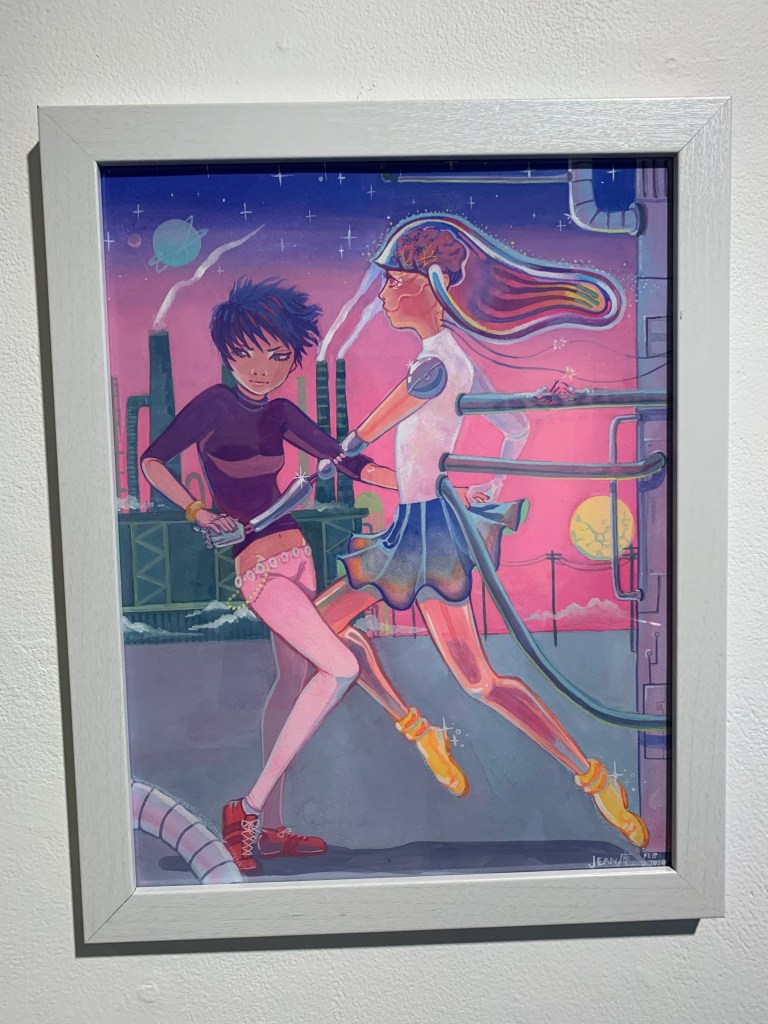
As mentioned above, Jean’s work correlates to her emotions she experiences throughout her daily life. She mentioned that sometimes she feels anxiety. I could be wrong, but I see how her piece, dance with me, up above represents that. One of the pipes seems to be breaking apart as if she’s breaking free from something. On the other hand, the figure in the purple shirt could be pulling her away from something she’s been excluding herself from. Such as dancing to correlate back to the title of the art piece. Her other painting, telephone game, could represent a child’s disbelief of gossip, bad news, etc. Jean verbalizes the voice of the girl with a pink dress with a dark and jagged representation. While on the other hand, the girl on the right percipience’s what she just heard with “gushy” innocence to represent joy. I understand that’s a little far out, but that’s the best way to describe the way I perceived the image.

My Experience

Being my first art gallery visit, I was pretty fascinated with the aroma an art gallery can feed off. While I was there, I resonated with the art Jean made. I enjoyed the vibrancy of her work and all the small detail. I’m not a very artsy dude, but my experience there brought out a creative side of me I haven’t felt since I was a child. So yes, past experiences do resonate their.

You Can Find Art Anywhere!

Here’s my groups art piece near the University Student Union

The formal qualities of my art would consist of a small frame with a brightly colored center. It is highly textured since its a combination of plants and dirt. Arguably, I would say that our piece is simple yet complex. The pink flowers in the middle bring out some life in the image. As far as the aesthetics, the image is rough, but pleasant at the same time. The plants don’t make the image look disturbing or jagged. The viewer could feel a sense of calmness and beauty since the art piece is basically depicting a small part of nature. The content of our piece depicts how the pink bloom represents of burst of life and existence in a world full of blandness.

My art piece was art before the rectangle. The rectangle just serves as a indicator of where to look at. After the rectangle is gone, my art will still be art because its a depiction of a small piece of nature. Before the rectangle, it was nature, after the rectangle, it’s still nature. It doesn’t loose its significance because four pieces of tape were removed.

Art is subjective, plain and simple. We only know objects are art if we feel it to be that way. One person can think a garbage can is just a garbage can, while someone else can interpret it as art with a deep meaning.

Yes, art can be something other than an object. For instance, the synergy a team has can be considered art. An athletes work ethic can also be considered art. Once again, its all interpretation.

Art indeed resides in the experience of the viewer. In order for art to be noticed, it first must resonate with the viewer or it doesn’t exist for that one person. For others, it’s a completely different perspective; which reinforces my claim on how the concept of art is completely subjective.

Finger Painting Activity

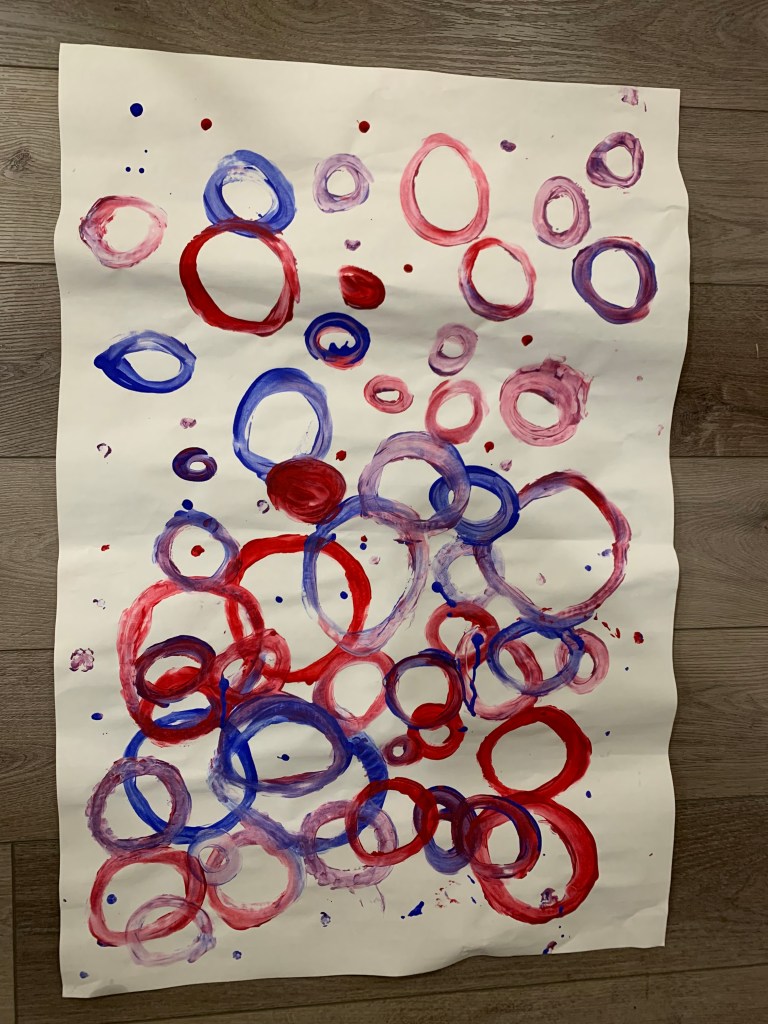
Here’s my finger painting!

What was the experience like? My experience with finger painting was quite enjoyable. It created a piece of mind that was nice. Didn’t really know what to create so I just started making circles lol.

Was it easier, harder, or different than you expected? It was quite easier than I expected. I thought it would be hard to create something appealing, but it turned out to be easy. Once I began doodling circles it started to become interesting.

How was the experience of making a painting with no subject? Confusing & Frustrating? Liberating & Inspiring? The experience was confusing since there was no subject to go off of. Later on, it was liberating due to the fact that there was no right or wrong thing to do. Just the freedom of my imagination.

How does this compare to other paintings you have seen? In my opinion, my painting is quite trash. I understand that abstract art can be anything and everything, but I’ve seen some crazy abstract paintings that have blown my mind away. For example, the art piece named, Melody of Passion, by Leonid Afremov is remarkable.

“Women’s Work” is also art

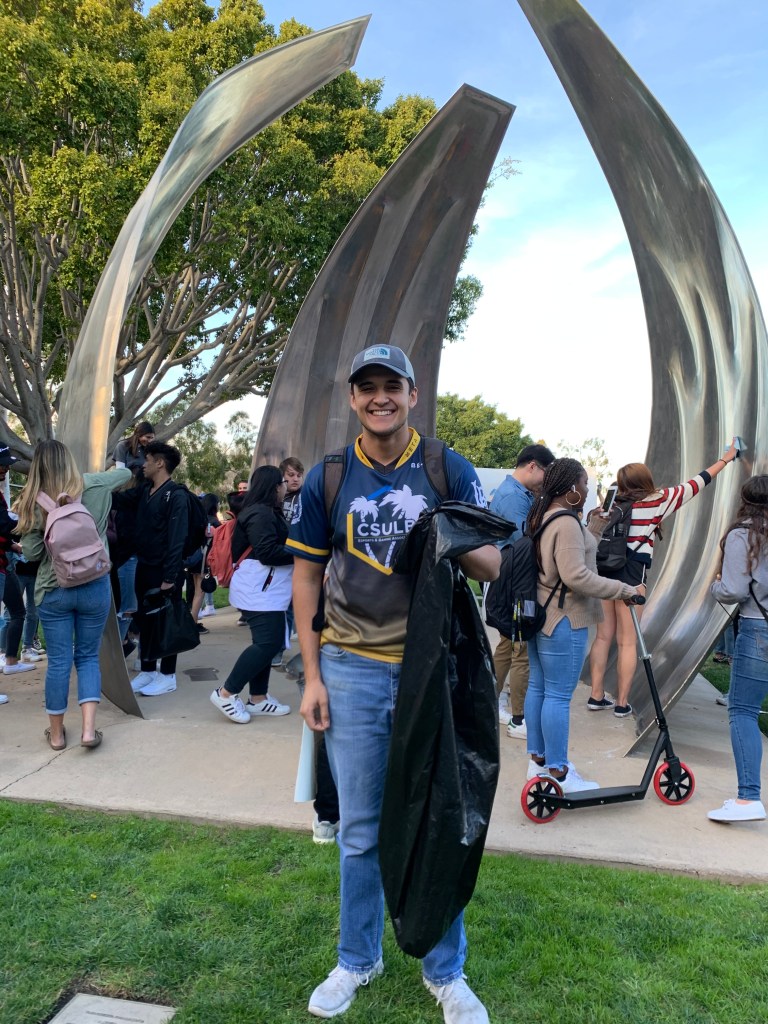
How did you feel performing Maintenance Art in the area around the USU? It felt nice knowing that we were doing something helpful for the campus. The sculpture looks way better now. However, what is Piotr Kowalski, wanted it to get dirty?

How are Mierle Laderman Ukeles cleaning the steps of an art museum and Richard Serra flinging molten lead against the walls of an art museum different? How are they the same? Are one or both “art”? Are one or both “not art”? They’re are different in the sense that they share different perspectives. One could say that Serra’s creation is “art” because its in a art museum and he’s doing something quite dangerous. Mierle Laderman Ukeles’s picture of her cleaning stairs can also be considered art since the beauty in itself, being cleaning a staircase, can feed off an appeal to something more than her physical activity. All in all, what I’m trying to say is that perspective is what ultimately decides what is art and what is not art. In my opinion they’re both pieces of art.

Was Mierle Laderman Ukeles’ Maintenance Art performance at the Wadsworth Atheneum “art”? Did the fact that her performance was at an Art Museum make it art? What if instead, she had simply gotten hired as a janitor at a factory somewhere and performed that job for 6 months? Would that have been art? What makes an act “art” or “not art”? If I’m being honest here, I do not think that her performance would not have been considered art if it were somewhere else. Once again it all comes down to perspective. Hence, people who work at a factory may have a different perspective of a lady cleaning a staircase. On the other hand, folks who would attend a art gallery may “sense” a different meaning to her “maintenance art. An act becomes art to whoever may deem it so.

Has Mierle Laderman Ukeles, or Jennifer Lopez, made you think differently about “Women’s Work”? Is “Women’s Work” ever art? If yes, when? If no, why not? Personally, living in this age, I’ve heard a a lot about equal rights for women and the appreciation for what they do for everybody. Which I’m totally in agreement with. So, with that being said, Mierle Laderman Ukeles and Jennifer Lopez didn’t really make me think differently because the term was clear to me from the beginning. “Women’s Work” is art. It’s everywhere just as it is for men. Society has developed traits in which women can be better than men in somethings and vice versa. However, as gender norms are evolving, it may soon become “Work is art.”

In class we discussed the woman who cleaned Donald Trump’s Star on Hollywood Blvd. Whose Star would you get down on your hands and knees to clean? I’d clean Mark Wahlberg’s star since he’s one of my favorite actors and most of the roles he plays are based off of real people.

Here’s a picture of me at the Maintenance Art Activity

Introduce Yourself (Example Post)

This is an example post, originally published as part of Blogging University. Enroll in one of our ten programs, and start your blog right.

You’re going to publish a post today. Don’t worry about how your blog looks. Don’t worry if you haven’t given it a name yet, or you’re feeling overwhelmed. Just click the “New Post” button, and tell us why you’re here.

Why do this?

  • Because it gives new readers context. What are you about? Why should they read your blog?
  • Because it will help you focus you own ideas about your blog and what you’d like to do with it.

The post can be short or long, a personal intro to your life or a bloggy mission statement, a manifesto for the future or a simple outline of your the types of things you hope to publish.

To help you get started, here are a few questions:

  • Why are you blogging publicly, rather than keeping a personal journal?
  • What topics do you think you’ll write about?
  • Who would you love to connect with via your blog?
  • If you blog successfully throughout the next year, what would you hope to have accomplished?

You’re not locked into any of this; one of the wonderful things about blogs is how they constantly evolve as we learn, grow, and interact with one another — but it’s good to know where and why you started, and articulating your goals may just give you a few other post ideas.

Can’t think how to get started? Just write the first thing that pops into your head. Anne Lamott, author of a book on writing we love, says that you need to give yourself permission to write a “crappy first draft”. Anne makes a great point — just start writing, and worry about editing it later.

When you’re ready to publish, give your post three to five tags that describe your blog’s focus — writing, photography, fiction, parenting, food, cars, movies, sports, whatever. These tags will help others who care about your topics find you in the Reader. Make sure one of the tags is “zerotohero,” so other new bloggers can find you, too.

Design a site like this with WordPress.com
Get started